

Spring is one of the most popular times of the year to move. Temperatures are milder than in summer, days are longer, and many people prefer to relocate before the busy summer moving season begins.
However, moves during this period also come with a few specific challenges. Spring rain can appear unexpectedly, mud can quickly be tracked into the house, and seasonal allergies can make the process more difficult than you might expect. In addition, demand for moving companies begins to increase as early as March.
With a bit of planning and a few simple strategies, spring can become one of the easiest times of the year to move. The tips below can help you avoid common problems and organize your move so everything runs smoothly and without unnecessary stress.
In short:
- Protect your home’s entrance from spring mud with plastic sheeting or cardboard
- Schedule your move strategically, preferably on a Tuesday or Wednesday
- Prepare an allergy kit for moving day
- Seal moving boxes and protect furniture from rain
- Take advantage of spring cleaning to get rid of unnecessary items
- Check the air conditioning system before moving in
- Make sure outdoor utilities are active at the new address
- Use the move as an opportunity to reorganize your seasonal wardrobe
- Clean the old home and prepare the new one before unpacking
1. Create a Mud-Proof Entrance
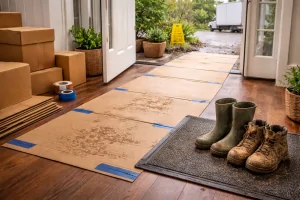
Spring brings pleasant temperatures, but also a common issue that is often overlooked on moving day: mud. During a move, people go in and out of the house dozens of times, and wet shoes can quickly leave marks on floors or carpets.
A simple doormat at the entrance is not enough when it is raining or when the ground around the house is wet. In just a few minutes, the floor can become dirty or even damaged.
Hack:
Create a protected path between the door and the area where boxes are being carried.
You can use:
- adhesive carpet protection film
- large sheets of cardboard secured with floor tape
- absorbent entry mats
This simple solution is commonly used by professional moving crews to protect floors during relocations in rainy seasons. It also helps keep the inside of the house clean and reduces the time needed for cleaning after the move.
2. Book Movers During the “Spring Gap”
Many people associate the busy moving season with summer, but demand begins to rise as early as spring. Families who want to move with children before the summer break or before the new school year often start scheduling their moves as early as April.
If you wait too long, you may discover that convenient dates are already booked or that rates increase as the season approaches its peak.
Hack:
Book your move for Tuesday or Wednesday during the second week of the month. These days are usually less in demand than weekends or the end of the month, which means more availability and sometimes better rates.
For more details, you can also read our dedicated article: Best Day to Move: Why Mid-Week Is the Secret.
3. Prepare an Allergy Kit
Spring is pollen season, and moving can stir up a lot of dust from closets, attics, or storage areas. For people sensitive to allergies, the combination of outdoor pollen and accumulated indoor dust can make moving day more uncomfortable than expected.
Constant sneezing or irritated eyes can make the organization process much more difficult, especially when you need to handle dozens of boxes and household items.
Hack:
Prepare a small box labeled “Priority” with items you may need on moving day:
- antihistamines
- nasal spray
- tissues
- dust masks
Keep this box in an easily accessible place or transport it in your personal car. This way, you will not have to search through dozens of boxes to find medication exactly when you need it.
4. Prepare for Spring Rain
Spring is known for unpredictable weather. Even if the forecast looks clear in the morning, a short rain shower can appear right in the middle of your move.
The problem usually arises when boxes and furniture are being carried between the house and the moving truck. Even a few minutes of exposure to rain can soak cardboard boxes or damage upholstered furniture.
Hack:
Protect moisture-sensitive items in advance:
- fully seal boxes with packing tape, leaving no open gaps
- wrap upholstered furniture in stretch wrap
- prepare tarps or moving blankets for carrying items to the truck
If you want to see exactly how boxes should be prepared for a move, this guide on how to pack boxes for moving explains the most effective packing techniques step by step.
5. Use Spring Cleaning to Declutter Before the Move
Spring is the traditional season for deep cleaning, and moving provides the perfect opportunity to get rid of items you no longer use.
Many people pack unnecessary belongings only to realize after the move that they no longer need them. Reducing the number of items before packing can make the entire move faster and more efficient.
Hack:
Plan a garage sale or an online sale about two weeks before the move. During this period, people are often interested in buying household or garden items.
Anything you do not manage to sell can be donated. This way, you will have fewer items to pack and fewer boxes to transport to your new home.
6. Check the Air Conditioning Before Moving Day
If you move toward the end of spring, temperatures can rise quickly, and your first day in the new home may be warmer than expected. After hours of carrying boxes and furniture, the absence of a functioning air conditioning system can make moving day far more exhausting.
Many people only discover after moving in that the cooling system is not working properly or requires maintenance.
Hack:
Schedule a quick inspection of the air conditioning system before moving day or immediately after you gain access to the new home. A simple check can prevent unpleasant surprises exactly when you need comfort the most.
7. Make Sure Outdoor Utilities Are Active
Spring often brings outdoor activities, especially after a move. Mud or dirt brought in by the moving crew may remain on the sidewalk, driveway, or patio, and some plants may need water immediately after transport.
For this reason, outdoor utilities can sometimes be just as important as those inside the house.
Hack:
Before moving day, check whether the outdoor faucet and water supply are active at the new address. This will allow you to quickly wash away any mud and provide water for plants that were transported during the move.
8. Use the Move to Swap Seasonal Clothes
Spring is a transition period between heavy winter clothing and a lighter summer wardrobe. Instead of packing all your clothes randomly, moving can become the perfect moment to reorganize your closets completely.
Many people end up unpacking dozens of items they do not need immediately, which can unnecessarily clutter the new home.
Hack:
Separate your clothes by season before packing:
- heavy winter clothes can be placed directly into vacuum bags for long-term storage
- clothes you will wear in the coming months can be transported in wardrobe boxes so they remain on hangers
This way, you will unpack only the items you need right away, and your closets will remain organized from the very first day.
9. Clean Both Homes Strategically
Moving offers a rare opportunity: both homes are almost empty at the same time. This makes cleaning much easier than it usually is.
However, if you do not plan the right moment for cleaning, you may end up cleaning the same surfaces twice or having to clean again after boxes have already been brought inside.
Hack:
Clean the old home after the furniture and boxes have been loaded onto the truck, and do a quick cleaning in the new home before bringing your belongings inside.
It is much easier to wipe floors, cabinets, and surfaces when the space is completely empty. It also allows you to start the move in a clean environment that is ready for unpacking.
FAQ: Spring Moving
Is spring a busy time for moving?
Yes, spring marks the beginning of the busy moving season. Demand starts to increase as early as March and continues through the end of summer, as many people prefer to move before the summer break or before the start of the school year. For this reason, booking movers a few weeks in advance is recommended.
What should you pack first when moving in spring?
For spring moves, it is recommended to start with items you use less frequently, such as seasonal decorations, books, sports equipment, or heavy winter clothing. These items can be packed several weeks before the move without affecting your daily routine.
Can moving boxes get damaged by rain?
Yes. Cardboard boxes can absorb moisture if they are exposed to rain, which can weaken their structure. For this reason, it is important to seal them completely with packing tape and transport them quickly between the house and the moving truck.
Is spring weather good for moving furniture?
In general, the moderate temperatures of spring are favorable for transporting furniture. Unlike summer or winter, there are no extreme temperatures that could affect sensitive materials such as wood or certain finishes.
How early should you start packing before a spring move?
In most cases, it is best to start packing about two to three weeks before moving day. This gives you enough time to organize your belongings, remove unnecessary items, and avoid rushing during the final days.
Are weekday moves better in spring?
Often, yes. Moves scheduled during the week tend to be less busy than those on weekends or at the end of the month. This can provide more flexibility when choosing a moving date and sometimes lower costs for moving services.
Get a Free Moving Quote Today