

One essential step that is often underestimated during a move is move-out cleaning — and, just as importantly, proper move-in cleaning. Whether you are leaving a rental apartment or preparing to move into a new home, a well-structured move-out cleaning checklist helps ensure that no important areas are overlooked, saves time, and prevents issues related to security deposits or hygiene.
Move-out cleaning generally involves two distinct stages:
- a thorough cleaning of the old property, typically after it has been fully emptied
- cleaning and sanitizing the new home before furniture and personal belongings are moved in
In this guide, you’ll find a clear, practical, and easy-to-follow checklist designed for both apartments and houses, helping make the moving process smoother and more organized. You’ll also find a printable version, so you can keep it handy and post it on the wall throughout the process.
Cleaning Apartment Checklist for Moving
Move-out cleaning for an apartment is always done after the space has been completely emptied. Without furniture, access to all surfaces becomes much easier, resulting in a more thorough and effective cleaning process.

Kitchen
The kitchen is one of the most important areas during move-out cleaning, as it accumulates grease, odors, and invisible residue over time.
Essential checklist:
- cleaning the refrigerator, including the interior and door seals
- degreasing the oven, stovetop, and range hood
- wiping down cabinets inside and out
- cleaning the sink, faucet, and drains
- wiping backsplash tiles and cooking-area walls
- washing the floors and baseboards
Bathroom
The bathroom is inspected very carefully during a move, as it is directly associated with hygiene and cleanliness.
- cleaning the toilet, sink, bathtub, or shower
- removing limescale buildup and soap residue
- cleaning grout lines and ventilation areas
- wiping mirrors and light fixtures
- cleaning cabinets and drawers
- washing the floor and hard-to-reach corners
Living Room, Bedrooms, and Other Rooms
In living spaces cleaning should be consistent and detail-oriented, even if these areas may appear simpler at first glance.
- vacuuming and washing floors
- wiping baseboards, electrical outlets, and light switches
- cleaning doors, door frames, and handles
- washing windows and cleaning window sills
- emptying and wiping built-in closets
Hallways and Often Overlooked Areas
These areas are often forgotten, even though they are among the first things people notice.
- wiping down walls in high-traffic areas
- cleaning the intercom, thermostat, and electrical panel
- washing the floors, including hard-to-reach corners
- cleaning the inside of the front door
Cleaning Home Checklist for Moving
Move-out cleaning for a house follows the same basic principles as cleaning an apartment, but it involves additional spaces that require separate attention. While the interior of the home is cleaned according to the apartment checklist, the key differences appear in storage areas and outbuildings that are not typically found in apartments.
During a move, these spaces should be cleaned in a functional manner so the home is left in a proper and hygienic condition.
Garage
- sweeping and washing the floor, with attention to oil stains
- removing dust from shelves, walls, and corners
- wiping down storage surfaces
- cleaning the garage door and accessible mechanisms
The focus is on basic order and cleanliness, not on completely removing long-term wear and tear.
Basement
Basements tend to accumulate dust, cobwebs, and unpleasant odors over time, especially when ventilation is limited.
- removing dust from beams, pipes, and corners
- sweeping or vacuuming the floor
- airing out the space when possible
- cleaning shelves and storage areas
- doing a quick check for damp spots or persistent odors
A deep cleaning is not required, but visible dirt and accumulated residue should be removed.
Attic
The attic is most often used as temporary storage and is rarely accessed, but it should still be checked during a move.
- removing any leftover items
- lightly cleaning accessible surfaces
- removing accumulated dust
- checking access points and lighting
Attic cleaning is minimal but necessary, especially if the space has been used for storage.
Closets and Storage Rooms
These spaces are small but very easy to overlook.
Essential checklist:
- completely emptying shelves
- wiping down storage surfaces
- vacuuming or washing the floor
- cleaning corners and other hard-to-reach areas
Terrace and Balcony
In both houses and some apartments, these areas are considered part of the living space and should be included in the move-out cleaning process.
- sweeping and washing the floor
- wiping railings
- cleaning sliding doors or access windows
- removing debris or forgotten items
Download the Printable Move-Out Cleaning Checklist
To make the process easier, we’ve prepared a complete, well-structured, and easy-to-check cleaning checklist that you can use whether you’re moving out of an apartment or a house.
You can download it for free, print it, or keep it on your phone and check off each step as you go. It’s useful both for cleaning your old home and for preparing your new place before unpacking.
👉 Download the move-out cleaning checklist and use it as a practical guide to make the process more organized, faster, and far less stressful.
What Should You Clean First When Moving Into a New House or Apartment?
Even if the space appears clean, there are certain surfaces that should be sanitized first before bringing in furniture and personal belongings.
The basic principle is to start with areas related to personal hygiene and direct contact, then continue with the rest of the home.
- Bathroom – Always Cleaned First
The bathroom requires the highest level of hygiene, no matter how clean it may look at first glance.
- the toilet, sink, bathtub, or shower
- faucets and high-contact surfaces
- grout lines and hard-to-reach corners
- cabinets and drawers on the inside
- the floor
- Kitchen – Contact and Storage Surfaces
The next priority area is the kitchen, since this is where food is prepared.
- countertops and work surfaces
- the inside of cabinets and drawers
- the refrigerator and appliances
- the sink and drains
- walls in the cooking area
- Bedroom – The Resting Space
The bedroom is the place where you will spend the most time during the first days after moving in.
- the floor and baseboards
- windows and window sills
- built-in closets
- electrical outlets and light switches
- Floors Throughout the Entire Home
Floors should be cleaned after the main areas have been sanitized, to avoid getting them dirty again.
- thorough vacuuming
- washing floors, starting with less frequently used rooms
- finishing with hallways and the entry area
- Remaining Rooms and Final Details
At the final stage, you can clean:
- the living room
- the home office
- secondary rooms
- doors, handles, and light switches
Cleaning Supplies Needed for Moving
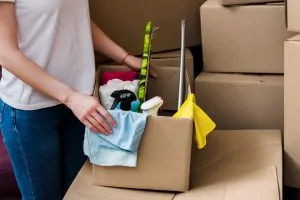
Move-out cleaning requires a few well-chosen products that effectively cover all surfaces. A thoughtfully prepared list helps reduce cleaning time and avoids unnecessary transport.
Basic Products
- all-purpose surface cleaner
- kitchen degreaser
- limescale remover for the bathroom
- floor cleaner suited to the surface type
- glass and mirror cleaner
Useful Tools and Accessories
- microfiber cloths in different colors for bathroom and kitchen use
- sponges and brushes in various sizes
- mop and bucket
- vacuum cleaner or broom
- durable trash bags
- protective gloves
For international moves or long-distance relocations, it is recommended to use small, easy-to-transport quantities or to purchase cleaning supplies directly at the destination.
Before you start packing your cleaning supplies, it’s important to know which items should be set aside first so they remain accessible until moving day. If you’re unsure what to pack early and what to leave for last, we recommend this practical guide on what to pack first when moving a house or apartment, which helps you avoid situations where you’re left without essential items during the final days before the move.
How to Pack Cleaning Supplies for a Move
Cleaning products require special attention when packing, especially as part of a well-organized move. Liquids, pressurized containers, and chemical substances can cause issues if they are not handled and transported properly.
Basic Rules for Proper Packing
- keep only the cleaning products you actually need and discard nearly empty containers
- tightly seal all bottles and containers
- use sealed bags or separate boxes for liquids
- do not pack cleaning products together with clothes, textiles, or fragile items
- clearly label the box that contains cleaning solutions
What Is Recommended NOT to Transport
For long-distance moves, many moving companies recommend not transporting large quantities of detergents or chemical solutions, especially if they are prone to leaking or are flammable. In many cases, it is safer and more efficient to purchase cleaning products directly at the new location.
The Role of a Professional Moving Company
When working with an experienced moving company such as Moishe’s Moving, the process becomes clearer and more structured. Professional teams can explain in advance:
- which types of products can be transported safely
- which items should be separated or disposed of before the move
- how to properly organize your final boxes, including those containing cleaning supplies
Whether it is a local move or a long-distance relocation, partnering with an experienced moving company reduces the risk of incidents and allows you to focus on the most important stages of the move, including final cleaning and organizing your new home.
Frequently Asked Questions About Move-Out Cleaning
Is move-out cleaning mandatory?
In most cases, yes. For rental properties, move-out cleaning is essential in order to recover the security deposit.
How long does a complete move-out cleaning take?
For an apartment, it usually takes between 3 and 6 hours. For a house, it typically takes between 6 and 10 hours, depending on the size of the property and any additional spaces
Is cleaning done before or after the move?
Move-out cleaning is done after the property has been completely emptied. Move-in cleaning is done before furniture and personal belongings are brought in.
Can I do the cleaning myself, or do I need a professional service?
It depends on your available time, budget, and level of expectations. For fast-paced moves or long-distance relocations, outsourcing the cleaning is often more efficient.
Get a Free Moving Quote Today