

Moving furniture becomes complicated the moment the first scratch appears on a solid wood dresser or when a couch arrives with damaged corners.
Most damage doesn’t happen because of a long-distance drive. It happens due to improper packing, lack of corner protection, or incorrect load distribution inside the truck.
If you want to know exactly how to pack furniture for moving without risking scratches, cracks, or moisture damage, the process must be adapted to the material — wood, upholstery, leather, or glass — and completed with proper loading inside the truck.
In short:
- Do not apply plastic directly to wood or leather.
- Use moving blankets as the first protective layer.
- Protect corners separately — that’s where most damage occurs.
- Empty drawers and secure them without taping over finished surfaces.
- Inside the truck, use tie-down straps and eliminate empty gaps.
The standards outlined below reflect the methodology used by Moishe’s Moving crews in residential and commercial projects across NYC.
Why Furniture Gets Damaged During a Move
To properly understand how to pack furniture for moving, you first need to understand where damage actually occurs.
There are four primary causes:
1. Impact Damage
Direct impacts typically happen during loading and unloading. Cabinet corners, table legs, and exposed edges are the first to be affected. Even a minor bump against a door frame can leave permanent marks if the edges aren’t properly protected.
2. Friction Damage
Furniture that isn’t properly secured inside the truck shifts during transit. Even a 20-minute local move can result in serious scratches if pieces are not separated with moving blankets or furniture pads.
Friction is one of the most underestimated issues when packing furniture for moving.
3. Moisture and Condensation
This is where most DIY mistakes occur.
Applying stretch plastic directly onto wood or leather can trap condensation, especially in humid climates. It may seem harmless at first, but over longer distances or with fluctuating temperatures, it can damage the finish.
That’s why professionals use moving blankets as the first protective layer and apply plastic wrap only as an external securing layer.
4. Poor Truck Loading
Many people assume packing alone is enough. It isn’t.
Even if you know how to wrap furniture for moving correctly, if the pieces aren’t secured with tie-down straps and the weight isn’t properly distributed, the furniture will shift during transport.
Essential Supplies for Packing Furniture for Moving
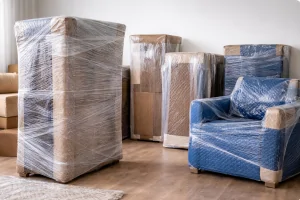
The quality of the materials you use directly impacts the final outcome. Many people focus on how to wrap furniture but overlook the fact that proper protection starts with the right equipment.
For packing furniture for moving at a professional standard, you need:
- Moving blankets or furniture pads
These serve as the first protective layer for almost any piece. They absorb impact and reduce friction. They are essential for wood furniture, painted surfaces, and delicate finishes.
- Stretch plastic wrap
Used to secure blankets in place or to shield upholstery from dirt. It should never be applied directly to wood or leather. Its role is stabilization, not primary protection.
- Bubble wrap and packing paper
Used for fragile surfaces, glass components, decorative elements, or disassembled parts. Bubble wrap should not be placed directly on delicate finishes without a protective layer underneath.
- Corner protectors
Corners are the most vulnerable areas of furniture. Dedicated corner protection helps prevent impact damage that commonly occurs during handling.
- Mattress bags and sofa covers
For mattresses and sofas, these covers reduce exposure to dust and dirt during transport.
- Moving straps, ratchet tie-downs, and a dolly
Packing without securing items inside the truck is incomplete. Straps and transport equipment reduce shifting and help distribute weight properly.
The right materials do not complicate the process. They make it more efficient and significantly reduce the risk of costly damage. Professional packing services rely on layered protection and systematic securing inside the truck.
How to Pack Furniture for Moving: Step-by-Step
A proper packing process follows a clear sequence. Skipping steps is one of the most common causes of damage.
Step 1: Disassemble Large Furniture Properly
Disassembling large pieces reduces weight and pressure points. Tables, bed frames, and bookcases should be taken apart whenever possible.
All hardware (screws, bolts, nuts) should be stored in sealed, labeled bags. Attaching the bag securely to the main piece helps prevent loss.
Step 2: How to Protect Wood Furniture When Moving
For wood or finished surfaces:
- Apply moving blankets or furniture pads as the first protective layer.
- Add extra protection to corners.
- Use stretch plastic wrap only over the blanket to secure it in place.
This method prevents scratches and reduces the risk of condensation. For premium pieces or sensitive finishes, a white-glove moving service includes individual handling and customized protection.

Step 3: How to Wrap Upholstered and Leather Furniture
For sofas and armchairs:
- Fully cover the piece with moving blankets.
- For stabilization, apply plastic wrap over the blanket, not directly on the fabric.
- Avoid airtight sealing for extended periods.
- Leather furniture requires a breathable layer between the surface and any plastic wrap.
Step 4: How to Protect Glass, Mirrors, and Fragile Surfaces
Glass requires reinforcement, not just wrapping.
- Apply tape in an X pattern to help minimize shattering.
- Add a layer of packing paper.
- Use rigid cardboard for structural support.
- Finish with bubble wrap.
- Transport glass items vertically, not flat.
Step 5: Securing Drawers, Doors, and Hardware
Drawers should be emptied, especially for long-distance moves. To secure them, use stretch wrap or soft rope over the protective blanket.
Do not apply adhesive tape directly onto finished surfaces.
Once the furniture is properly packed, the next critical stage is truck loading. Even well-protected furniture can be damaged if it is not secured and weight is not properly distributed.
How to Wrap Furniture for Moving Without Causing Damage
Proper wrapping is about the correct layering sequence, not the amount of plastic used.
The basic rule: what touches the surface matters most.
For Wood Furniture
- Cover the piece completely with moving blankets or furniture pads.
- Add dedicated corner protection.
- Apply stretch plastic wrap over the blanket to secure it in place.
- Do not apply plastic directly onto wood. In fluctuating temperatures, condensation can develop and affect the finish.
For Upholstered Furniture
- Wrap the piece fully with moving blankets.
- Use plastic wrap only for stabilization.
- Avoid airtight sealing for extended periods.
For Leather Furniture
- Place a breathable fabric layer between the surface and any plastic wrap.
- Plastic should serve only as a securing layer, not direct protection.
For Glass and Mirrors
The correct layering order is:
- Tape in an X pattern (to help limit shattering)
- Packing paper
- Rigid cardboard
- Bubble wrap
Transport glass items vertically, not flat.
Best Way to Pack Furniture in a Moving Truck
This is where it becomes clear whether all the packing work was effective.
Inside the truck, furniture is exposed to inertia forces—braking, acceleration, and constant vibration. If it isn’t secured strategically, it will shift.
Think of loading as building a structure.
Heavy items form the base: wardrobes, refrigerators, and large sofas should be placed toward the front of the truck. This area remains the most stable during transport.
Medium-sized pieces fill the side spaces, and fragile items should never be positioned along the outer edges.
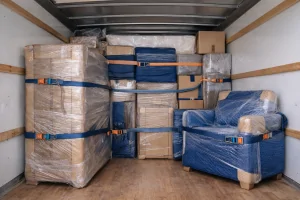
Three rules prevent most damage:
- Do not leave large gaps between pieces.
- Do not stack heavy weight directly on finished surfaces.
- Secure each section with tie-down straps.
If a piece of furniture can be moved by hand after loading, it will move during transit.
For example, during a local move in NYC, proper truck securing often determines the difference between a scratch-free delivery and unexpected repair costs. If you want to avoid these risks, see how our local moving in NYC work.
How to Move Furniture Without Damage in Tight Spaces
Apartments, narrow staircases, small elevators, and tight corners are the areas where furniture is most exposed to direct impact. In these situations, it doesn’t matter how well you handled the wrapping if you can’t control the movement.
Before moving any large piece:
- Measure doorways, hallways, and the elevator.
- Check rotation angles for sofas and wardrobes.
- Remove doors from their hinges if necessary.
To protect the space itself:
- Use padding on door frames.
- Protect wall corners.
- Cover sensitive flooring with protective layers.
When maneuvering large items:
- Keep the center of gravity low.
- Do not drag furniture across the floor.
- Use dollies or furniture gliders for stability.
In tight spaces, movement control matters more than strength. Slow, coordinated motions significantly reduce the risk of impact.
For heavy objects with an unstable center of mass, such as moving a piano, handling and protection requirements differ substantially from standard furniture.
Packing Furniture for Storage vs Packing for Moving
Packing for a move and packing for storage serve different purposes. During a move, furniture is exposed to impact, vibration, and friction. In a storage unit, the primary risks are long-term pressure and temperature fluctuations.
For moving, protection should focus on immediate stability. Moving blankets absorb transport shock, while stretch plastic wrap secures protective layers so they do not shift inside the truck. The process is designed for hours or days, not months.
In storage, the approach changes. Wood and leather should not be sealed airtight. In environments with fluctuating humidity, fully enclosing furniture in plastic can trap condensation. Even in a climate-controlled unit, materials need some level of breathability.
Another often overlooked factor is sustained pressure. Inside a truck, weight is distributed for transport. In storage, furniture may remain in the same position for months. If a sofa is compressed or a table supports additional weight, warping or structural stress can occur.
Elevating furniture off the floor reduces the risk of moisture absorption. Maintaining space between pieces also helps prevent long-term friction damage.
In temporary transition situations, moving and storage solutions in NYC require packing methods adapted for both transportation and mid-term storage conditions.
Common Furniture Packing Mistakes to Avoid
Evaluating packing standards is an essential criterion when analyzing how to choose the best moving company in NYC.
Mistakes that leave permanent damage:
- Plastic directly on wood – can trap condensation and damage the finish.
- Adhesive tape on finished surfaces – the adhesive can strip or damage the lacquer.
- No corner protection – roughly 80% of impact damage occurs at corners.
- Loading without securing – if pieces can be moved by hand after loading, they will shift during transport.
- Stacking weight on fragile surfaces – constant pressure leads to warping or structural stress.
Another overlooked detail is overpacking.
Excessive plastic tension or overly tight securing can damage upholstery or compromise the structure.
Furniture rarely gets damaged because of a single mistake. More often, it is the result of two or three rushed decisions combined.
9. Professional Movers’ Tips That Prevent Damage
✔ Plan the route before handling the furniture
✔ Protect the space, not just the furniture
✔ Secure items by sections, not individually
✔ Recheck the load after the first few miles
✔ Prioritize movement control over force
Frequently Asked Questions About Packing Furniture for Moving
How do you pack furniture for moving properly?
The correct process begins with disassembling large pieces whenever possible. Each item should be protected with moving blankets or furniture pads as the first layer. Stretch plastic wrap is applied over the protective layer for stabilization, not directly onto the surface.
Inside the truck, furniture must be secured with tie-down straps and separated to prevent friction. Packing without proper securing is not enough.
What is the best way to protect wood furniture when moving?
Wood should be covered with a soft textile layer before any other material is applied. Moving blankets are the standard solution. Plastic wrap may be used for stabilization, but it should never come into direct contact with the finished surface.
Corners require additional protection. Most scratches occur in these areas during handling.
Should I use plastic wrap on furniture?
Yes, but only for external securing. Stretch plastic wrap helps stabilize blankets and provides protection against dirt.
Applying it directly to wood or leather can trap moisture, especially during long-distance moves or in fluctuating temperature conditions.
How do professional movers wrap furniture?
Professional crews use a layered system: soft protection on the inside, external stabilization, and reinforced corner protection. Securing the load inside the truck is just as important as wrapping.
Furniture is not simply covered. It is prepared for handling and transport.
How do you protect furniture during long-distance moves?
In a long-distance moving services context, constant vibration and temperature fluctuations require additional stabilization of each piece.
Strategic truck loading and periodic load checks during transit significantly reduce the risk of damage.
Get a Free Moving Quote Today