

Moving, especially in a city like New York, comes with its fair share of challenges — and nothing raises the stress level quite like moving a piano. At Moishe’s Moving Systems, we’ve been safely relocating pianos across NYC since 1983. Whether you’re moving a spinet across town or a baby grand to a new borough, this guide covers everything you need to know.
Below we’ll walk through the step-by-step process of how to move a piano safely, weigh DIY versus professional options, and answer the most common questions about piano transport.
Remove detachable parts (lid, music stand, pedals), wrap the piano in moving blankets, and secure it firmly with straps. Use a piano dolly to transport it and keep the piano upright at all times. You’ll need at least 3 people for an upright piano and 4–5 for a grand. For stairs, use a stair dolly and work slowly. Never lay a grand piano flat during transport.
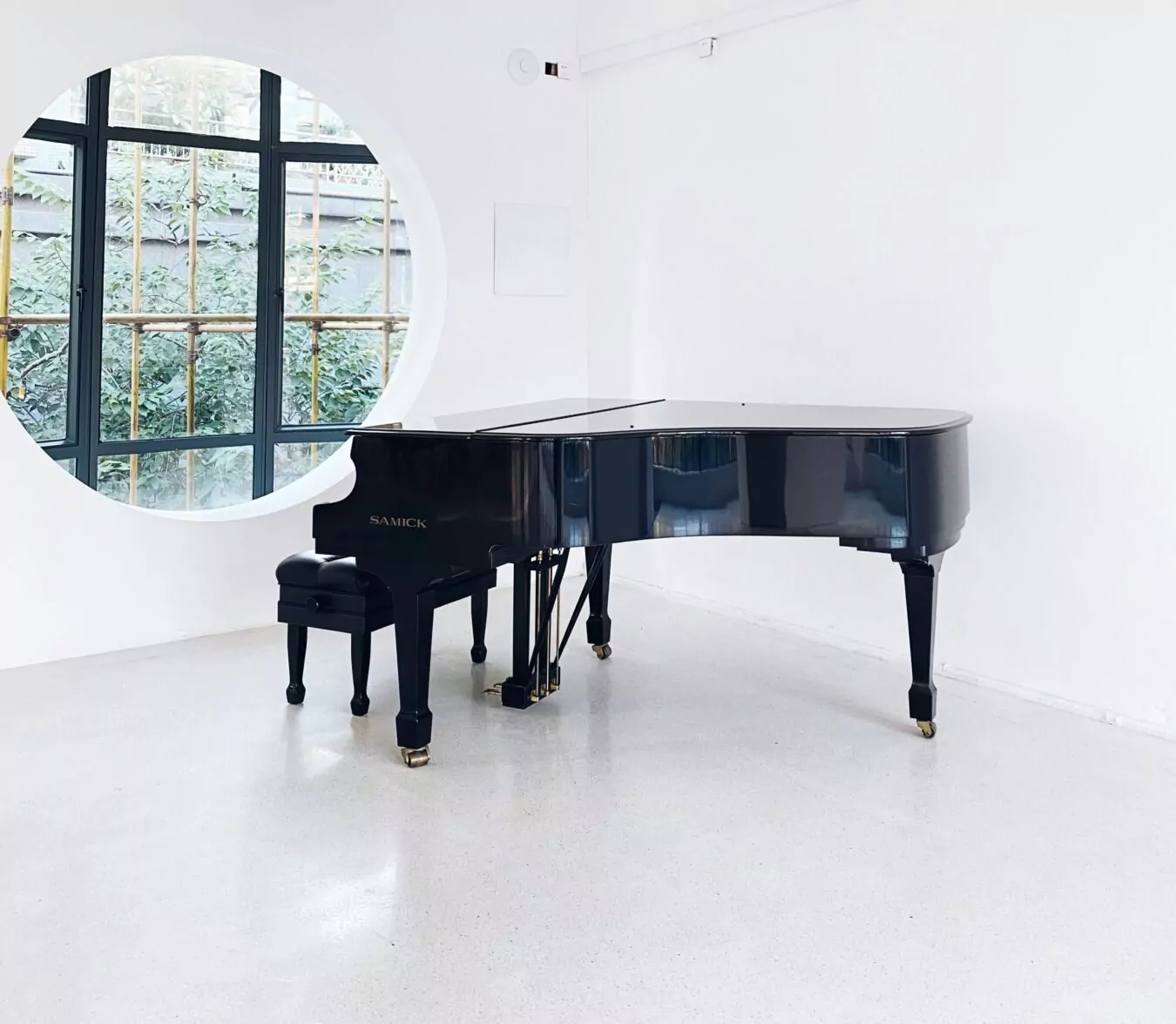
DIY vs. Professional Piano Moving: Which Is Right for You?
Pianos are among the most difficult household items to relocate. They’re extremely heavy (upright pianos range from 400–800 lbs; grand pianos can exceed 1,200 lbs), have fragile internal components, and offer very few safe handholds. Before deciding how to proceed, honestly assess the size of your piano, the complexity of your route, and your available help.
Considerations for DIY Piano Moving
Moving a piano yourself is possible for short, straightforward moves — but it requires proper planning and equipment. Consider the piano’s size, the distance it needs to travel, and how many tight doorways, hallways, or stairs are involved. At minimum, you’ll need 3 people for an upright piano and 4–5 for a baby grand or full grand. Without the right equipment and technique, the risk of injury or damage to the instrument is significant.
The Benefits of Hiring Professional Piano Movers
Professional piano movers like Moishe’s Moving Systems bring specialized dollies, padding, straps, and the hands-on experience to navigate NYC’s narrow hallways, elevator lobbies, and walk-up buildings safely. While the cost is higher than a DIY approach, the peace of mind — and the protection against a costly repair bill — is well worth it. Contact us for a free quote and weigh that against the risk of going it alone.
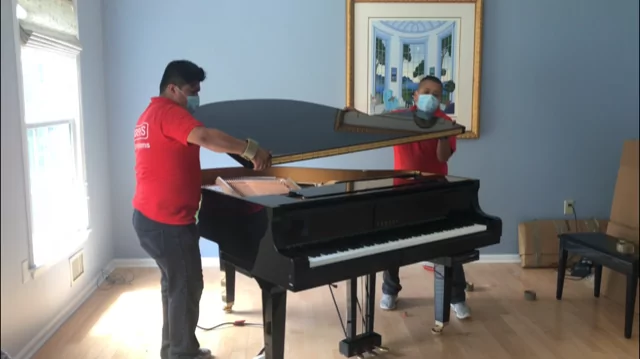
Preparing for a Piano Move
A successful piano move starts well before moving day. The preparation phase is where most DIY mistakes happen — skipping steps here leads to damaged instruments and injured backs.
Assess the Piano and Your Moving Environment
Before touching the piano, walk your entire planned route. Measure every doorway (pianos commonly get stuck at 32″–34″ openings), check for low overhead obstacles, count stairs, and identify where a dolly can and cannot go. If you’re moving to a new building, contact the super about elevator dimensions and whether a COI (Certificate of Insurance) is required for moving day — many NYC buildings mandate one.
Gather Your Supplies
You’ll need the following before you start:
- Heavy-duty piano dolly (a furniture dolly is not a substitute)
- Moving blankets or piano padding (at least 3–4)
- Ratchet straps or moving straps
- Stretch wrap or packing tape to secure blankets
- Screwdrivers for removing detachable parts
- Bubble wrap or foam for pedals and legs
Quality moving supplies and boxes are available directly from Moishe’s if you need them.
Arrange Help and Pick Your Moving Date
Piano moving is never a solo task. Confirm your team of 3–5 helpers well in advance and align on the date. Avoid peak summer weekends and rainy days — humidity can damage a piano’s internal components, and wet floors create dangerous conditions for heavy equipment. If you need temporary storage between your move-out and move-in dates, Moishe’s Self Storage offers free pickup and delivery with a driver and helper — a practical option for protecting your piano during the transition.

How to Move a Piano: Step-by-Step
Follow these steps in order whether you’re executing a DIY move or managing a professional crew. Skipping steps — especially the protection and securing steps — is how pianos get damaged.
- Remove all detachable parts. Take off the keyboard lid, music stand, and fallboard. On a grand piano, remove the legs and pedal lyre carefully and wrap each piece individually in moving blankets.
- Wrap the piano body. Cover the entire piano with heavy moving blankets, paying special attention to corners and the keyboard area. Secure the blankets with stretch wrap or tape — don’t let them slip.
- Position the piano dolly. Tilt the piano slightly and slide a piano dolly beneath it. For upright pianos, center the dolly under the widest point. Lock the dolly wheels before releasing the piano.
- Secure with straps. Run ratchet or moving straps around the blanketed piano and through the dolly frame. The piano should not rock or shift when tested — if it does, re-strap before moving.
- Navigate the route. Move slowly and communicate constantly. One person should call turns and obstacles while others control the dolly. On ramps or loading docks, keep the heavy end leading the way downhill.
- Handle stairs carefully. This is the highest-risk step. Use a stair-climbing dolly if available. Have one person per stair on the low side and two on the high side, and move one step at a time. Never rush.
- Load and secure in the truck. Back the truck as close as possible to reduce carries. Use the ramp or liftgate. Once inside, strap the piano against the truck wall so it cannot move during transit.
- Reassemble at the destination. Refer to photos taken during disassembly. Reattach legs, pedals, and panels, then return the piano to its designated spot. Keep it away from HVAC vents, exterior walls, and direct sunlight.
- Schedule a tuning. Even a well-handled move will knock a piano’s tuning off. Wait 2–4 weeks for the instrument to acclimate to its new environment before booking a piano technician.
Top Tips for a Stress-Free Piano Move
Beyond the core steps, these best practices will further reduce the risk of damage and keep moving day manageable.
Hire Professional Movers for Peace of Mind
Experienced piano movers have encountered every configuration NYC buildings can throw at them — service elevators, narrow brownstone hallways, spiral staircases. Trusting this task to professionals like Moishe’s not only protects the instrument but protects you from personal liability if a helper is injured. Learn more about our local moving services and long-distance moving options.
Choose the Right Moving Date and Time
Mid-week mornings are typically the easiest time to move in NYC — less street traffic, easier double-parking, and building freight elevators are usually available. Avoid the last weekend of the month (peak NYC moving days) and always check the forecast. A dry, mild day is ideal for protecting both the piano and your crew.
Communicate Clearly with Your Moving Team
Brief everyone on the piano’s dimensions, the planned route, and any obstacles ahead of time — not in the moment. Assign one person as the primary caller who communicates turns and hazards. Clear communication prevents the split-second decisions that cause injuries and dropped instruments when moving in NYC.
Confirm Insurance Coverage
Before moving day, confirm what your mover’s valuation coverage includes for the piano specifically. Standard released value protection (60 cents per pound) is rarely sufficient for an instrument worth thousands of dollars. Ask about full-value protection or check whether your homeowner’s or renter’s insurance covers the piano during a move.
Pack and Protect Everything Else Too
The piano shouldn’t be the only thing wrapped and padded on the truck. Secure all fragile items, label boxes clearly, and make sure nothing can shift into the piano during transit. A well-packed truck protects both the instrument and everything around it.
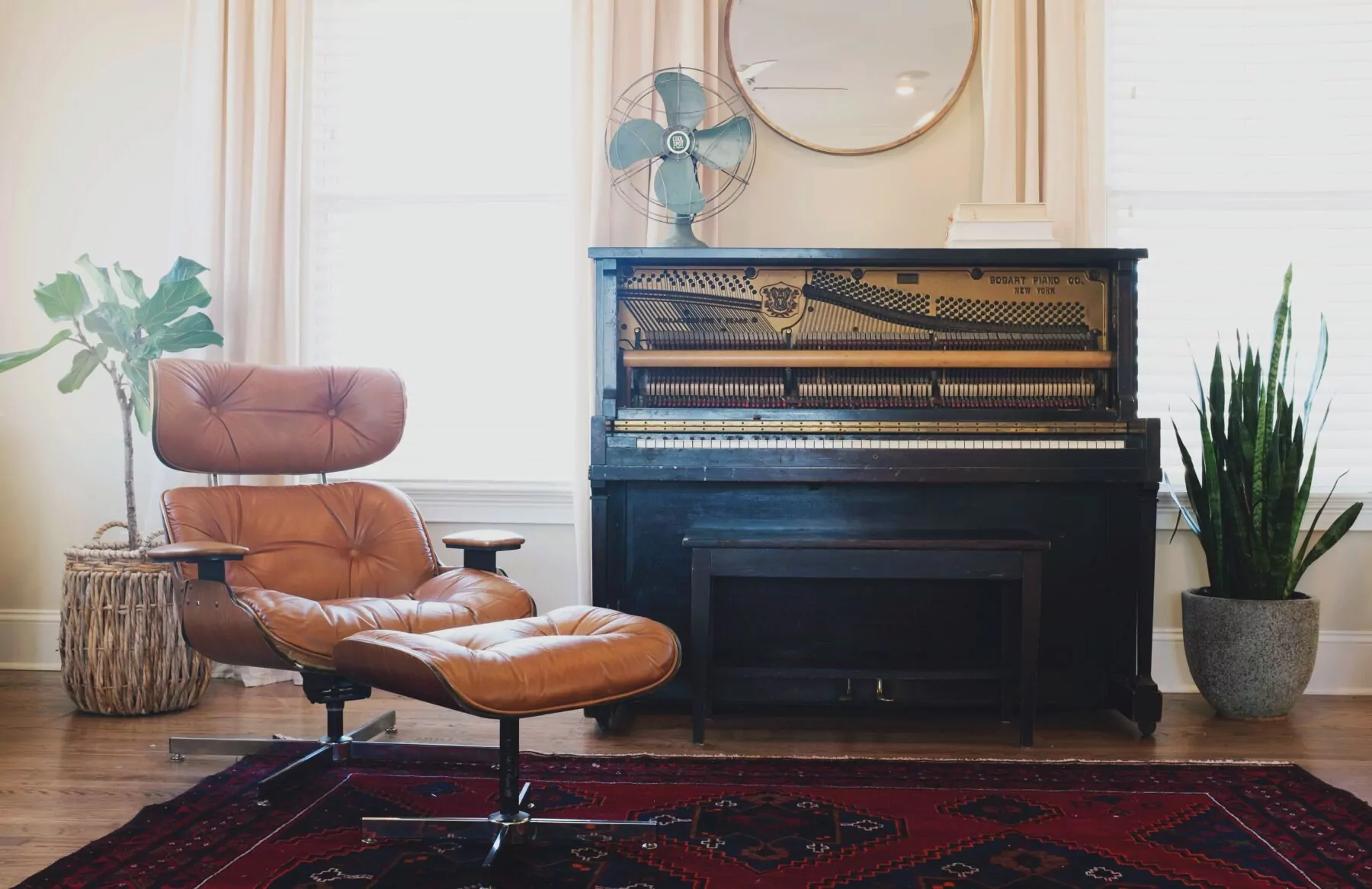
Moishe’s Moving Systems: NYC’s Trusted Piano Movers
Since 1983, Moishe’s Moving Systems has been New York City’s go-to resource for moving delicate, valuable items — including pianos of every type and size. From walk-up apartments in the West Village to high-rises in Hudson Yards, our team has the equipment and experience to get your piano where it needs to go safely.
Contact us today for a no-obligation quote on piano moving in NYC.
Frequently Asked Questions
Can you lay a piano down to transport it?
Laying an upright piano down is possible in limited circumstances but generally not recommended — it can stress the cabinet and shift internal components. If you must lay it down, remove detachable parts first, wrap it thoroughly in blankets, and keep the keyboard side facing up. Grand pianos should always remain upright; laying a grand flat can cause irreversible structural damage to the legs and rim.
How do you move a piano without a professional mover?
You’ll need a piano dolly, heavy moving blankets, ratchet straps, and at least 3–4 helpers. Remove detachable parts, wrap the piano, secure it to the dolly, and move slowly — especially through doorways and on stairs. For any move involving multiple flights of stairs or long distances, hiring professionals is strongly advisable to avoid injury and instrument damage.
Why is a piano so hard to move?
Pianos combine extreme weight (400–1,200+ lbs depending on type) with an irregular shape that offers almost no natural handholds. Their internal components — strings, hammers, bridges, and the iron plate — are precisely calibrated and can be knocked out of alignment by rough handling. Add in NYC’s narrow doorways and stairwells, and it becomes one of the most technically demanding moves a crew can undertake.
Do you need a dolly to move a piano?
Yes — a piano dolly is essentially required for any safe move. It distributes the piano’s weight evenly, protects your floors, and gives the crew control over direction and speed. Moving a piano without a dolly dramatically increases the risk of injury and damage to both the instrument and your home. For grand pianos, a dedicated grand piano board is used in addition to a standard dolly.
How do you move a piano that has no wheels?
Use moving straps to lift and maneuver the piano, and slide it onto a piano dolly for transport. With 3–4 helpers, work slowly through tight spaces, keeping the piano upright and balanced. For stairs, a stair-climbing dolly is the safest tool — it uses a rotating track mechanism to handle one step at a time. Moving pads under the piano’s base can also help it glide safely on hardwood or tile.
Get a Free Moving Quote Today