

Moving a washing machine or dryer may seem straightforward: unplug, lift, and go. In reality, these are some of the most commonly damaged appliances during a relocation, mainly because the drum, hoses, and internal components are highly sensitive to vibrations and sudden movements. Major manufacturers note in their manuals that improper handling can lead to a broken drum, internal water leaks, leveling system failures, or even a machine that won’t turn on after transport.
Most damage occurs at two critical moments:
– before the move (improper preparation, forgetting the transport bolts, uncovered hoses)
– and during transport (excessive tilting, incorrect securing inside the truck, lack of vibration protection)
Professional manufacturer guides recommend a combination of technical preparation and proper equipment. When any of these steps are skipped, the risk of damage increases significantly.
In this article, we bring together the most important technical recommendations, industry best practices, and real experience from the moving field so you can relocate your washer or dryer without damage, improvisation, or extra costs. Whether you’re moving it yourself or working with professional help, these steps represent the proper standard for safe handling.
Proper preparation before the move
Proper preparation eliminates most risks. Everything you do at this stage prevents leaks, drum impact, internal damage, and difficult handling.
1. Completely empty and dry the appliance
- Run a short ‘Drain & Spin’ or ‘Clean’ cycle, depending on your model.
- Leave the door open for 12–24 hours to allow the drum to dry.
- Wipe the detergent drawer and door frame by hand.
- Drain the water from the drain filter (if your model has front access).
2. Clean all accessible components
- Remove lint from the dryer (filter + surrounding area).
- Make sure there is no residue in the detergent drawer.
- Wipe the inside of the drawers and the lid with a dry cloth.
- Eliminate odors and moisture that could ferment during transport.
3. Properly disconnect the hoses
- Turn off the cold/hot water valves.
- Carefully unscrew the hoses.
- Place the ends in heavy-duty bags (secured with rubber bands) to prevent leaks.
- Drain the discharge hose into a sink or bucket.
- Check that no water remains in the drain pump filter or drain hose.
4. Install the transport bolts (essential)
(This is the step that 80% of people skip, and it’s where most damage occurs.)
- Locate the openings on the back and insert each bolt.
- Check that the drum no longer moves freely.
- Use the exact transport bolts designed for your model — substitutes can cause damage.
- Without them, the drum can hit the interior walls → total damage.
5. Protect the sensitive components
- Tape the door just enough to prevent accidental opening.
- Cover the front panel with a thin blanket.
- Protect the machine’s corners with foam or cardboard.
- Secure the detergent drawer if it tends to slide out.
6. Bundle and secure the cables and hoses
- Tie the power cord with a velcro strap.
- Attach the hoses to the side of the appliance with non-invasive tape.
- Avoid letting them hang — they can get caught on stairs or corners.
7. Measure the moving path
- Measure doorways, hallways, and narrow areas.
- Identify spots that require turning or minimal tilting.
- Remove rugs, obstacles, and small items from the route.
- Keep all interior doors wide open.
8. Prepare the necessary equipment
- Appliance dolly (with straps).
- Non-slip gloves for better grip.
- Moving blankets for protection.
- Lifting straps if the unit is heavy.
- Adhesive tape that does NOT leave marks on the appliance’s surface.
9. Do a final check before moving
- Is the drum secured?
- Are the hoses completely drained?
- Are the cables bundled and not hanging?
- Is the appliance fully dry?
- Are all protective materials securely in place?

Moving and transporting the washer or dryer
The actual moving stage is where most injuries and damages occur. The more controlled the handling, the lower the risk.
10. Use an appliance dolly
- Choose one with a stable platform and securing straps.
- Avoid carrying the unit “by hand” — it’s heavy, bulky, and unstable.
- Position the machine on the dolly with the front side facing outward for better control.
11. Lift the appliance correctly
- Grip the appliance from the sides, not from the front or the door.
- Keep your back straight; bend your knees when lifting.
- Do not pull on the hoses or the power cord.
- Ask for help — a washing machine weighs between 130–200 lbs.
12. Avoid excessive tilting
- For washing machines: do not tilt them more than 45° (protects the drum).
- Dryers can tolerate a slightly greater tilt than washers, but keep the angle minimal to avoid shifting internal parts.
- Vertical movements are the safest.
13. Move through doorways and narrow hallways in a controlled position
- Enter at a slight angle, then rotate the appliance.
- Avoid hitting corners — the casing can bend easily.
- Continuously check the bottom edge to avoid hitting thresholds or steps.
14. Protect the appliance when moving it on stairs
- Secure the appliance to the dolly with straps.
- Go step by step, without skipping any.
- Keep the weight leaning forward, with one person above and one below.
- Avoid relying on a single person to guide the move — this is where most accidents happen.
15. Secure the appliance inside the vehicle
- Place the machine against the truck wall, not in the middle.
- Use tie-down straps in two points (top and bottom).
- Put thick moving blankets between the appliance and the vehicle walls.
- Do not place heavy items on top — the casing bends easily.
16. Watch out for vibrations during transport
- Check all straps before leaving.
- Avoid very uneven roads if you have an alternative route.
- Sudden stops or sharp turns can affect the drum, even with the transport bolts installed.
17. During unloading: handle it just as carefully
- If the appliance was exposed to extreme temperatures, let it sit for a few minutes before plugging it in.
- Move it into the house with the same care used during loading.
- Avoid removing the protective materials until it’s placed in its final position.
Proper reinstallation after the move (without damaging anything)
18. Place the appliance in its final position before removing the protective materials
- Position the unit where it will stay, then remove the blankets and protective padding.
- Do not remove the protection first and then push the appliance across the entryway or outside — the casing can scratch easily.
19. Remove the transport bolts
(The number one mistake that damages washing machines after a move)
- Locate each bolt on the back of the unit.
- Remove them completely, carefully, without forcing anything.
- Check that the drum moves freely before turning the machine on.
- Keep the bolts — you’ll need them for your next move.
20. Properly reconnect the hoses
- Attach the hoses to the water valves, tightening them moderately (not excessively).
- Connect the drain hose exactly in the position recommended by the manufacturer.
- Make sure the rubber seals are intact and not twisted.
- Inspect visually for leaks immediately after the first fill cycle.
21. Level the appliance
(Essential for reduced vibrations and proper operation)
- Adjust the leveling feet until the appliance is completely stable.
- Gently tilt the unit by hand — if it moves, it’s not leveled correctly.
- Poor leveling can cause strong vibrations and noise.
22. Arrange the cables and hoses
- Make sure they’re not bent behind the machine.
- Leave enough space for ventilation.
- Do not push the appliance fully against the wall (it restricts airflow).
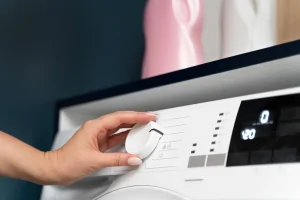
23. Run a short test cycle
- Run a short rinse cycle.
- Listen for any thumping or unusual noises from the drum.
- Check the back and underneath the appliance for leaks.
- For dryers: test the start function and airflow.
24. Avoid using heavy cycles immediately
- Run a short test cycle first to confirm everything works properly before washing a full load.
- This helps the drum and leveling feet settle properly.
Common mistakes that lead to damage (and how to avoid them)
- Forgetting the transport bolts → damaged drum.
- Moving the appliance without draining the water → internal leaks.
- Dragging the washing machine without protection → bent casing.
- Lifting the unit with two people but without a dolly → injury risk.
- Tilting the machine beyond 45° → drum displacement.
- Weak securing inside the truck → strong vibrations and impact.
- Leaving the hoses loose → they can get caught on corners or steps.
- Storing the unit temporarily in humid areas → rust.
- Turning on the machine with the transport bolts still installed → extreme vibrations.
- Incorrectly installing the hoses → leaks during the first use.
When should you call a professional moving company?
Sometimes, moving a washing machine or dryer becomes more complicated. The weight of the appliance, narrow spaces, or the lack of proper equipment can turn a simple maneuver into a real risk of injury or damage.
And this doesn’t apply only to appliances. The same thing happens with large refrigerators, heavy furniture, or even a piano — all items that require significant care and precise control.
If the appliance feels too heavy, if you don’t have an appliance dolly, if you need to navigate tight staircases, or if you simply don’t feel safe lifting bulky items, it is completely reasonable to call a professional team. In these situations, it’s not about convenience — it’s about protecting your belongings and, most importantly, your safety.
In conclusion, moving a washing machine or dryer becomes much easier when you follow the proper steps for preparation, transport, and reinstallation. These appliances are sensitive, and rushed handling can lead to costly damage.
However, with a bit of organization and attention to detail, the process remains safe and predictable. And when the weight, space, or conditions exceed what you can manage on your own, hiring a professional team is the best decision to protect both the appliance and your home.
Get a Free Moving Quote Today