

An emergency move usually catches you unprepared. Maybe you’ve been given an unexpected deadline, maybe you need to vacate your home sooner than you thought, or maybe a situation came up that you simply couldn’t control. In a moment like this, it’s normal to feel pressure, confusion, and a lack of direction. You don’t have time to plan, you have many decisions to make, and everything seems to happen at once.
Still, even when time is short, a move can be managed efficiently if you know what needs to be done first. The order in which you make decisions matters a lot: first you secure a place to stay, then you organize the move itself, and finally you take care of the required paperwork and notifications.
We created this guide after decades of experience in the moving industry, where we’ve seen people who had to move overnight, and we’ve learned — together with them — what’s truly needed for a relocation that doesn’t turn into a disaster.
You’ll find simple, practical steps to regain control: what to do immediately, how to pack quickly without losing important items, what needs to be notified and in what order, plus when it’s safest to call professionals, especially if you have heavy or fragile items.
Let’s go through everything step by step, so the process becomes easier for you.
What an emergency move actually means
A move becomes an “emergency move” when you have to vacate your home or relocate within a very short timeframe — anywhere from a few hours to 2–3 days. You don’t have time for detailed plans, complex lists, or multiple trips to the store. Everything must be prioritized and compressed into simple steps.
The most common situations that lead to an emergency move are:
- sudden expiration or termination of a lease
- unexpected job changes that require rapid relocation
- structural issues in the home (flooding, minor fires, damage, mold)
- medical or family situations that require immediate relocation
- evictions, legal decisions, or major personal changes
- natural disasters that make the home unsafe
In moments like these, pressure kicks in. This completely changes the dynamic: you’re no longer aiming for perfection, but for safety, speed, and protecting essential belongings.
In an emergency move, your three main priorities become:
- securing a place to stay for the next few days
- moving only what’s necessary without injuring yourself or damaging items
- handling the required documents and notifications
Once you understand these three pillars, the chaos starts to take shape, and you can move on to the next step.
First step – stop the panic and set your priorities
In an emergency move, the first thing you need to manage is your mindset and pace. Panic steals your time, makes you forget important items, and blocks your ability to make quick decisions.
That’s why, before packing anything, before phone calls and transport, take 2–3 minutes to breathe, then set your priorities in this order:
1. Secure a place to stay as quickly as possible
Within the next 24–48 hours, you need to know exactly where you will sleep — whether it’s the new home or a temporary solution. It can be:
- a room already available in your new place
- a friend, a relative, or a host
- an inexpensive Airbnb / motel / temporary accommodation
- a space booked just for a few nights
2. The actual move: decide what’s critical and what can wait
Not everything needs to be moved right now (of course, this depends on the nature of your emergency move). In emergency moving situations, the goal is to move the essentials first — not everything you own.
Ask yourself quickly:
- What do I absolutely need to take? (documents, electronics, medications, clothes for 2–3 days)
- What can go into storage?
- What can I donate or leave behind?
- What items are too heavy or risky to move on my own?

3. Change of address and mandatory notifications
If you’re moving to another state or must vacate the home immediately, a few notifications cannot be postponed:
- utility providers (electricity, gas, internet)
- the landlord / building management
- medical, banking, and insurance services
- possibly your new address for mail forwarding
In fast moves, these are handled in parallel with packing — not after you arrive at the new home.
4. Create a mini hour-by-hour plan, not a day-by-day plan
You don’t have time for complex planning, but you do need some structure.
Example for the next 12 hours:
- Hour 0–1: sort documents + pack the absolute essentials in one bag
- Hour 1–3: pack the main room, only the essential items
- Hour 3–4: take a short break and quickly review your priorities
- Hour 4–6: disassemble anything you can move on your own
- Hour 6–12: transport, storage, final key handoff
In parallel: quick notifications to your service providers
Essential checklist for an emergency move (1–3 days)
This is a condensed checklist, exactly what you need when you’re short on time. Check off each item as you go.
Items you need to keep within reach
- personal documents (ID, passport, car papers)
- medications + a basic first-aid kit
- cash / cards
- laptop, phone, chargers, small devices
- clothes for 2–3 days
- basic hygiene items
Packing supplies
- sturdy boxes in different sizes
- heavy-duty bags (including for clothes or textiles)
- tape and scissors
- bubble wrap for fragile items
- marker for labeling
Items that should be packed first
- documents
- small electronics
- valuable personal items
- cosmetics and medications
- clothes for the first few days
Items that should be packed last
- bedding, towels, bulky textiles
- dishes and utensils used on moving day
- cleaning supplies needed until you leave
- last-minute clothing changes
What NOT to pack on your own when you’re short on time
- large appliances (refrigerator, washing machine, stove)
- very heavy or bulky furniture
- dangerous or fragile items (thick glass, large mirrors, marble slabs)
- safes, professional equipment
These require proper equipment, lifting straps, and at least 2–3 people.
10 things to check before walking out the door:
- Did you take all your documents?
- Did you grab your chargers and personal electronics?
- Did you have a clear place to stay for the next 24–48 hours?
- Did you label the boxes?
- Did you take photos of the home (for proper handover)?
- Did you turn off the water, gas, and electricity?
- Did you empty the refrigerator?
- Did you take out the trash?
- Did you hand over the keys or set the handover time?
- Did you check your wallet, phone, and carry-on bag?
How to pack efficiently when time is limited
When you have only a few hours or 1–2 days to pack, you can’t follow a traditional process. You need simple rules that reduce time, volume, and risk.
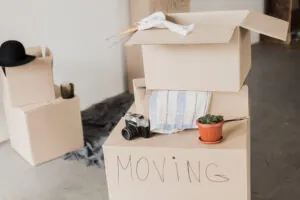
Basic rule: pack by priority, not by room
You don’t start with “the bedroom,” “the kitchen,” or “the balcony.” In emergency moves, you pack in this order:
- valuable and essential items
- small and fragile electronics
- clothes for the next few days
- cosmetics / medications / personal care items
- textiles and items that can be compressed easily
- the last-used items in the home
Use the “3 boxes and one bag” method
This is the fastest way to sort:
- Box 1: essential items (absolute necessities)
- Box 2: items you need to take but aren’t urgent
- Box 3: items that can stay behind / be donated / put in storage
- Large bag: textiles, clothes, bedding — compress them immediately
For fragile items: fast packing that actually works
When you don’t have time or professional packing materials:
- wrap everything in towels, T-shirts, or thin blankets
- fill empty spaces in the boxes with socks, scarves, or small clothing items
- label the box immediately with FRAGILE – top
- place heavy items at the bottom, never on top of fragile ones
Reduce volume without overthinking
In urgent situations, quick decisions are essential. Ask yourself:
- Do I need this item in the next 30 days?
- Can I buy it cheaply if I really need it?
- Will it slow down the moving process?
If the answer is “no,” put it in the donate / storage box.
Common mistakes in fast moves (and how to avoid them)
- trying to move items that are too heavy by yourself → risk of injury
- putting everything in thin bags → they tear and you lose items
- not labeling the boxes → you waste time when unpacking
- overfilling boxes → they break when lifted
- packing fragile items last → much higher chance of breaking them
Avoid these mistakes and you’ll save both time and money.
Handling paperwork – contracts, utilities, and change of address
In an emergency move, paperwork can quickly become overwhelming because everything must be done fast and, most importantly, in the correct order. A few delayed notifications can lead to legal issues or extra costs. That’s why you need a short and clear checklist.
- Notify the landlord or building management immediately
Whether you’re a tenant or a homeowner in an apartment building:
- inform them of the exact date you will vacate the home
- ask if you have any additional obligations (cleaning, minor repairs, etc.)
- clarify the key handover and any potential deductions from your deposit
This step must be done within the first few hours.
- Handle utilities in the correct order
You don’t need to shut everything off on the same day, but you do need to notify the providers.
Recommended order:
- internet / cable – these can be stopped quickly and without complications
- electricity – inform them of the final meter reading
- gas – mandatory for safety
- water – usually the last one
Remember: in fast moves, some services can be transferred directly to your new address.
- Change of address: what is mandatory and what can wait
In emergency moves, the priorities are:
- bank / cards
- insurance
- important mail
- workplace
- primary care doctor or clinics where you’re already established as a patient
- Returning the home without conflicts
To avoid difficult discussions after you move out:
- take photos of every room before handing it over
- note any pre-existing issues
- return everything in writing (keys + a handover confirmation, if possible)
- keep proof of all payments you made
- If you don’t have time to update every service provider
In urgent moves, sometimes you simply can’t notify everyone on time. Prioritize like this:
- the place where you’ll be staying
- handing over the old apartment
- utilities
- address changes with banks / insurance
- everything else after you settle in
When and why you should call an emergency moving company
An emergency move forces you to make difficult decisions in a very short time. It’s not the moment for stubbornness or risky attempts. Sometimes, the help of a professional moving and storage team is exactly what you need to finish the move without injuries or damage.

Here are the situations where it’s completely justified to call a professional team:
- When you have heavy items you can’t lift on your own
- refrigerator
- washer / dryer
- large furniture
- piano, safe, aquariums
Moving these without proper equipment can be dangerous.
- When you live on an upper floor and don’t have an elevator
Narrow stairs + urgency = the perfect recipe for accidents. A moving crew can handle everything safely with 2–3 people.
- When you need to vacate the home on the same day
Professionals can:
- pack the essentials quickly
- load everything safely
- transport it without unnecessary delays
Choose a company that also offers storage space for your belongings until you find a new home.
- When you have no one to help you
Not all friends can show up at the last minute. If you’re on your own, a moving company takes away the stress and the risk.
- When you can’t afford damage
In rushed moves, people often break items unintentionally or hit walls and doors. A professional team minimizes these risks.
How to take care of yourself and your family in the middle of the chaos
In an emergency move, the easiest thing to overlook is your own well-being. The rush, pressure, and rapid decisions can exhaust you faster than you realize. That’s why, no matter how little time you have, it’s important to stay aware of how you feel and protect your energy. Take short breaks — even just a few minutes — because they help you think more clearly and avoid rushed decisions that could cause bigger problems later.
If you have children, explain briefly what is happening without overwhelming them emotionally. You can give them a simple “task,” such as putting their favorite toy in a bag or choosing clothes for the next day. Small responsibilities reduce their anxiety because they feel like they have a role in the process.
For pets, the most important thing is to give them a calm space away from the commotion. Keep them in a quiet room with their bowls, litter box, bed, or blanket. Sudden moves can scare them, and having a stable corner helps them feel safe.
Don’t try to do everything on your own. If everything starts to feel overwhelming, pause briefly and sort things out: what needs to be done right now, what can be delayed, and what isn’t urgent at all. In fast moves, perfection doesn’t exist — only small steps that take you from one point to the next. Taking care of yourself is the first of those steps.
Frequently asked questions about emergency moves
- What if I don’t have anyone to help me?
If you’re alone, prioritize only the essentials and call professionals for heavy items. Moving on your own—especially on stairs or in a rush—can be dangerous. In urgent situations, even a few hours of professional help can make a big difference.
- What is considered an emergency move?
Any move carried out within a very short timeframe: from a few hours to 1–3 days. Reasons may include eviction, rapid job relocation, structural problems in the home, personal changes, or medical situations.
- What should I take with me if I don’t have time to pack everything?
Documents, medications, small electronics, cash/cards, clothes for 2–3 days, valuable personal items, and the things you rely on daily. Everything else can be stored, donated, or moved later.
- Is it worth paying for a moving company if I have to vacate the apartment the same day?
Yes, especially if you have large appliances or heavy furniture. In fast moves, the risk of injury or damage is much higher if you try to move everything alone.
- How do I pack fragile items quickly?
Use towels, clothes, and textiles for protection. Put heavy items at the bottom, fill empty spaces with socks or soft materials, and clearly label the box.
- What if I can’t find immediate accommodation?
Consider temporary options: a friend, a relative, a low-cost Airbnb, or a motel. The important thing is to have a place to sleep for the first 24–48 hours, even if the rest of the move continues later.
- How do I reduce volume when I don’t have time?
Use the quick rule: if you won’t need it in the next 30 days, don’t pack it. Donate it, store it, or leave it for a later move.
- What if I can’t find enough boxes?
Use heavy-duty bags, laundry baskets, travel bags, suitcases, and improvised boxes. In emergency moves, perfect packing materials aren’t the priority—protecting essential items is.
Emergency moves are stressful, chaotic, and can throw you completely off balance. You don’t have time to plan, and many things happen at the same time. Still, with a clear step-by-step order, a bit of structure, and calm decision-making, the move becomes manageable. Even if it’s not perfect, the most important thing is to reach your new place safely and have the essential items you need right away.
We at Moishe’s Moving never want our clients to find themselves in a situation where they must move so quickly. But if it happens and you need support, we’re here to help — especially when you have heavy items, bulky furniture, or need to vacate your home in a very short time.
We can handle the entire process for you: from full packing to transport, temporary storage, and even unpacking in your new home when everything is ready for a fresh start.
If you need help, don’t hesitate to contact us!
Get a Free Moving Quote Today