

If you’re wondering how to pack shoes for moving, you’ve probably realized that shoes take up more space than expected and can be easily damaged during a move. If bent improperly, crushed under heavy items, or exposed to moisture, they can become unusable before you even unpack your first box.
Leather shoes, white sneakers, and tall boots require proper packing techniques. Below are the exact steps that work whether you’re moving locally or planning a long-distance move.
How Do You Pack Shoes for Moving?
If you want the quick version for packing shoes for moving, this method helps prevent deformation, odors, and scratches:
- Clean and fully dry each pair before packing.
- Stuff the inside with paper, socks, or packing paper to maintain shape.
- Wrap each pair individually in paper or bubble wrap.
- Use small boxes, not large overfilled ones.
- Place heavier shoes at the bottom and lighter ones on top.
- Fill empty spaces in the box to prevent shifting.
- Clearly label each box.
That’s the foundation. Below, we break down each step in more detail and explain when adjustments are necessary—especially for boots, cowboy boots, or long-term storage.
Best Way to Pack Shoes for Moving (Step-by-Step Method)
Step 1 – Clean and fully dry your shoes
Never pack dirty or damp shoes. Dust, salt, or moisture can damage materials during transport.
- Wipe the soles and exterior.
- Let them dry completely before packing.
- For leather shoes, avoid packing immediately after wet cleaning.
During a move that lasts several days, trapped moisture can lead to odors or mold.
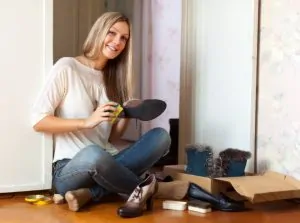
Step 2 – Stuff the inside to prevent deformation
Shoes lose their shape when compressed inside overfilled boxes. The interior must be supported.
You can use:
- Packing paper
- Socks
- Plain paper (avoid newspaper with ink)
- Shoe trees for leather shoes
For tall boots, stuffing is essential to prevent the shaft from bending.
Step 3 – Wrap each pair individually
To prevent scratches, each pair should be protected separately.
- Use packing paper or bubble wrap.
- Avoid tightly sealed plastic bags.
- For white sneakers, consider adding an extra protective layer.
Shoes rubbing against each other during transport can damage the finish.
Step 4 – Use small boxes, not large ones
Large boxes tend to become overfilled and difficult to handle. Shoes are heavy—especially boots or heels.
Ideally, use:
- Small moving boxes
- Original shoe boxes (if sturdy)
- Dividers if you’re packing multiple pairs
Place heavier shoes at the bottom and lighter ones on top.
Step 5 – Fill empty space and secure the contents
Empty space inside the box allows movement during transport.
Fill gaps with:
- Crumpled paper
- Lightweight clothing
- Towels
For well-organized moves, proper protection of personal items makes a significant difference during handling and transport. Especially in urban moves, where boxes are frequently moved, stable packing reduces the risk of damage.
How to Pack Shoe Boxes for Moving (Original Boxes vs. Moving Boxes)
Many people wonder whether it’s safer to keep the original shoe boxes or use moving boxes. The right choice depends on the type of shoes and the length of transport.
When original boxes are ideal
Original boxes work well if:
- They are sturdy and in good condition
- The move is local
- The shoes are valuable or collectible
For premium sneakers or fine leather shoes, original boxes provide additional structure and protection.
When small moving boxes are a better option
For longer moves or when packing multiple pairs, small moving boxes are typically safer.
Advantages:
- Distribute weight more evenly
- Reduce the risk of crushing
- Easier to handle and stack
Avoid placing loose individual shoe boxes inside a large box without support. Fill gaps and prevent internal movement.
Should you use plastic containers?
Plastic bins can be useful for storage but are not always ideal for transport.
The issue:
- They can trap moisture if sealed tightly
- They may create condensation in warm climates
If you choose this option, make sure the shoes are completely dry and add silica gel packets to control humidity.
How to Pack Boots for Moving
Boots require a different approach. They deform easily—especially tall styles or those made from structured leather. Without proper support, the shaft can bend permanently.
How to Pack Boots for Moving Without Bending Them
The main rule is vertical support.
- Fully stuff the interior with packing paper.
- Use boot shapers or shoe trees if available.
- Keep boots upright inside the box.
- Do not lay them flat under heavy weight.
For tall boots, you can roll firm cardboard inside the shaft for additional stability.
How to Pack Cowboy Boots Safely
Cowboy boots differ from standard boots because:
- They have a rigid structure
- They may feature embroidery or delicate leather
- They are heavier
Safe method:
- Fully stuff the interior.
- Wrap each boot individually.
- Separate them inside the box with a layer of paper.
- Avoid direct heel-to-heel stacking.
For long-distance transport, add extra padding around the toe area.
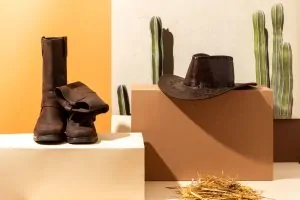
Preventing Creases in Leather Boots
Leather can crack if bent or compressed.
For protection:
- Don’t force boots into a box that’s too small.
- Avoid humid environments.
- Add silica gel packets if moisture is a concern.
For premium boots, original boxes may provide the safest option.
How to Pack High Heels and Sandals for Moving
High heels and sandals are more vulnerable than sneakers or boots. Heels can snap, straps can bend, and delicate materials scratch easily during transport.
For this category, the standard method needs adjustment.
How to Pack High Heels for Moving Without Damaging the Heel
The heel is the most fragile point. If it’s pressed sideways inside the box, it can break.
For protection:
- Wrap each shoe individually in packing paper or bubble wrap.
- Add an extra protective layer around the heel.
- Do not allow heels to touch directly.
- Place the shoes on their side, not standing upright on the heel.
For stilettos or thin heels, fill the surrounding space so there is no movement inside the box.
Protecting Delicate Materials (Suede, Patent Leather, Satin)
Delicate materials scratch easily during a move.
Recommendations:
- Do not use newspaper (ink can stain).
- Use white packing paper or unprinted paper.
- For suede, avoid plastic, which can create condensation.
- For patent leather, protect the glossy surface with an additional soft layer.
For shoes with emotional value—such as a pair worn at an important event or a rare model—the level of protection should be higher than for everyday footwear. In these cases, pack with extra care and choose storage conditions carefully.
How to Pack Sandals with Straps and Embellishments
Sandals with straps or decorative details require careful securing.
Safe method:
- Gently tie or fasten straps to prevent tangling.
- Wrap each sandal individually.
- Separate pairs with a layer of paper.
- Avoid placing pressure on buckles or decorative stones.
For delicate sandals, original boxes are often the safest option.
How to Pack 10+ Pairs of Shoes Efficiently
When you have more than 10 pairs, the challenge isn’t just packing—it’s organization. Managing volume efficiently follows the same principles used in structured packing overall. If you follow a clear set of rules before you begin packing, you significantly reduce the risk of damage and save time on moving day.
Sort before you pack
Before starting the actual packing process, reduce volume. A careful selection simplifies the move and decreases the number of boxes needed. If you have multiple pairs you haven’t worn in years, this is the right time to declutter before moving.
Divide them into three categories:
- Keep and wear frequently
- Store long term
- Donate or discard
Use the layering method for efficiency
For the best way to pack and move shoes in larger quantities, layering improves stability.
Method:
- Place a layer of packing paper at the bottom of the box.
- Put heavier shoes (boots) at the base.
- Add a protective layer.
- Place medium-weight shoes next.
- Finish with sandals or lightweight sneakers on top.
Do not leave gaps between layers. Movement inside the box is the primary risk factor.
Group by type, not randomly
Do not mix:
- Boots with delicate high heels
- Heavy shoes with fine sandals
- Dirty shoes with clean ones
Separating by type simplifies unpacking and reduces the risk of damage.
Use small moving boxes, not large ones
When packing 10+ pairs, the temptation is to use one large box. It’s not recommended.
Shoes can be surprisingly heavy when packed together. A large box:
- Becomes difficult to lift
- Puts pressure on the pairs at the bottom
- Increases the risk of deformation
Multiple small moving boxes are safer than one oversized, overfilled box.
Label strategically for quick access
If you’re moving into a new space, you’ll need certain pairs quickly.
Label boxes clearly, for example:
- “Daily shoes”
- “Work shoes”
- “Seasonal storage”
- “Occasional / formal”
Proper labeling reduces stress during the first few days after the move.
When extra protection is necessary
If you own premium collections or natural leather shoes:
- Add silica gel packets to control moisture
- Avoid tightly sealed plastic
- Consider climate-controlled storage if you won’t be unpacking immediately
For larger volumes, transport and storage conditions are just as important as proper packing techniques.
How to Protect Shoes During Long-Distance Moves
In a long-distance move, shoes remain in transit longer and are exposed to temperature and humidity fluctuations. For interstate moves, internal protection and box stability become critical.
Preventing Heat and Humidity Damage
In warm or humid climates, leather and suede shoes are especially vulnerable.
For protection:
- Do not use tightly sealed plastic bags.
- Add silica gel packets inside boxes.
- Avoid storing shoes in overheated spaces such as attics.
Excessive heat can warp soles and weaken adhesives.
Should You Use Climate-Controlled Storage?
For leather shoes, collections, or high-value items, climate-controlled storage reduces the risk of:
- Mold
- Deformation
- Material cracking
It’s especially recommended for storage periods longer than 30–60 days.
Packing Shoes in Suitcases vs. Moving Boxes
For short moves, you can transport shoes in suitcases.
Advantages:
- Saves space
- Reduces the number of boxes
Disadvantages:
- Risk of excessive pressure
- Limited protection for tall boots
FAQ – Packing and Moving Shoes
How do you pack shoes for moving?
Clean and fully dry each pair, stuff the interior for support, wrap them individually, and use small, well-secured boxes. Avoid tightly sealed plastic and fill empty spaces inside the box to prevent movement.
What is the best way to pack and move shoes?
The best way to pack and move shoes involves individual protection, internal support, and proper weight distribution in small boxes. For leather shoes or tall boots, interior support is essential.
Should you pack shoes first or last when moving?
For an efficient move, keep one accessible pair for moving day and pack the rest in advance. Planning in stages helps prevent last-minute congestion on moving day.
Are shoes better in boxes or bags when moving?
Boxes provide better structural protection. Bags should only be used temporarily and for short transport. For organized moves, small moving boxes are safer.
How do you pack white sneakers without damage?
Clean them thoroughly before packing, use white paper for protection, and avoid direct contact with darker shoes. Add extra padding to prevent friction.
Get a Free Moving Quote Today