
If you’re planning to move to Brooklyn and looking for the best neighborhoods, you’ve probably noticed there are major differences between them. The more you read, the more confusing it can become.
Brooklyn is a mix of historic brownstones, high-rises along the waterfront, walk-up buildings without elevators, and areas that look completely different just three subway stops apart.
Some people are searching for the safest neighborhoods. Others are focused on affordable rent. Some want fast access to Manhattan or an active vibe near Bedford Avenue.
In this guide, we analyze Brooklyn neighborhoods using real data on safety, costs, and moving logistics. If you’re planning a relocation, you’ll quickly understand which area is the right fit for you.
In short:
- For a fast commute to Manhattan: Williamsburg, Brooklyn Heights
- For families + parks: Park Slope
- For a safe and classic atmosphere: Brooklyn Heights
- For a more budget-friendly option + decent access: Crown Heights, Flatbush (check the specific area carefully)
- For active nightlife + mid-range rents: Bushwick (varies significantly by street)
Brooklyn Neighborhoods Overview: How to Choose the Right Area
When people search for the best areas in Brooklyn, they’re usually trying to answer one question: “Where will my day-to-day life feel easier?”
The differences between neighborhoods are real — and you feel them quickly after moving in. Before choosing an area, think about four key factors:
1. What You Can Afford Each Month
Rent varies significantly. In Brooklyn Heights or certain parts of Williamsburg, prices are high.
In Flatbush, you’ll find more affordable options, but the buildings and overall infrastructure may be different.
When evaluating the best neighborhoods, compare actual living costs — not just attractive listing prices.
2. How Much Time You’ll Spend Commuting
If you work in Manhattan, transportation matters every single day. Some neighborhoods offer direct access to express subway lines. Others require transfers or longer travel times.
The difference between a 20-minute and a 45-minute commute can become exhausting over time.
3. How Comfortable You Feel in the Area
Many people ask whether Brooklyn is safe. The answer depends on the neighborhood. There are safe neighborhoods with low crime rates, and there are areas where conditions can vary significantly from one block to another.
Beyond safety, atmosphere also matters:
- Do you prefer a quiet residential area?
- Do you want restaurants and nightlife nearby?
- Are you looking for easy access to a park?
4. What This Means for Your Move
Not all neighborhoods are equally convenient when it comes to moving. In many parts of Brooklyn, you’ll encounter:
- Walk-up buildings with no elevator
- Narrow staircases
- Strict elevator reservation policies
- Limited parking options for a moving truck
One of the most common challenges in Brooklyn is securing space for the truck. Complex parking regulations and alternate side parking rules can turn a simple stop into a logistical project — which is why understanding the NYC parking rules before your move is essential.
Truck traffic is strictly prohibited on parkways. Trucks must use designated commercial routes only to avoid fines and low-clearance bridge accidents.
How We Ranked the Good Neighborhoods in Brooklyn
To determine the best neighborhoods in Brooklyn, we analyzed each area based on the following factors:
- Official crime data
- Median rent and median home price
- Access to public transportation and estimated commute time to Manhattan
- Building types and moving logistics complexity
- Demographic profile and neighborhood trends over recent years
Each neighborhood is evaluated using the same criteria to ensure a fair comparison. The data is updated for 2025–2026 and benchmarked against the overall New York City average.
Is Brooklyn Safe? Crime Breakdown by Area
The most accurate answer we can give you is: generally, yes — but it depends on the neighborhood. Brooklyn is large, which means the differences between areas are real and can be significant.
Generally Low Crime Precincts
- 78th Precinct (Park Slope)
- 84th Precinct (Brooklyn Heights / Downtown)
- 76th Precinct (Carroll Gardens / Cobble Hill)
These consistently report lower violent crime rates compared to borough averages.
Higher Variation Areas
- 77th Precinct (parts of Crown Heights)
- 83rd Precinct (Bushwick)
- 70th Precinct (Flatbush)
Important: Safety varies by micro-location. Always review NYPD precinct data for the specific address.
Quick Summary: Best Areas by Priority
There isn’t a single neighborhood that is the best overall. There are neighborhoods that fit different situations — just as when comparing the best neighborhoods in NYC as a whole. The right choice depends on individual needs, such as:
Best for Young Professionals
Williamsburg and Bushwick attract young professionals due to fast access to Manhattan and an active lifestyle.
They offer strong subway connections, restaurants, coworking spaces, and modern apartment options.
Best Family Neighborhoods in Brooklyn
Park Slope and Brooklyn Heights are popular among families.
They feature highly rated schools, large parks such as Prospect Park, and quieter residential streets.
Searches for the best family neighborhoods in Brooklyn are consistently dominated by these areas.
Safest Brooklyn Neighborhoods
Brooklyn Heights, Park Slope, and certain parts of Clinton Hill have crime rates below the city average.
These neighborhoods frequently appear when people search for safe areas to live in Brooklyn.
Most Affordable Areas
Flatbush and certain sections of Bushwick offer more affordable rent compared to western Brooklyn.
The cost of entry is lower, but safety levels and transportation access should be evaluated carefully.
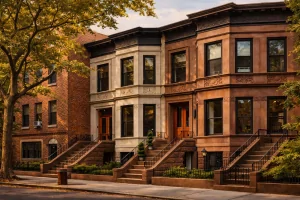
Best places to live in Brooklyn
Williamsburg
Williamsburg remains at the top of the best neighborhoods list, especially for its fast access to Manhattan and active social scene.
Estimated Rent (2025–2026):
- 1BR: ~$3,700 – $4,000+
- 2BR: often above $4,500
The waterfront area and high-rise buildings are the most expensive.
Transportation Access:
- L train (Bedford Ave)
- Fast connections to Manhattan (~10–20 minutes to Lower Manhattan)
Safety: Generally considered stable in the western and residential sections. Conditions may vary further east.
Moving Reality:
- Many high-rise buildings require elevator reservations
- Limited parking for a moving truck, especially on weekends
- Heavy traffic in popular areas
In short: excellent access, high cost, and a strong fit for young professionals.
Park Slope
Park Slope is frequently mentioned among the safest and best family neighborhoods in Brooklyn.
Estimated Rent (2025–2026):
- 1BR: ~$3,000 – $3,800
- 2BR: ~$4,000+
Demand is high, and inventory is limited, especially in brownstones.
Transportation Access:
- F and R trains
- Reasonable access to Manhattan (~20–35 minutes)
Safety: The area has a stable reputation and is considered one of the safest residential neighborhoods in Brooklyn.
Moving Reality:
- Many walk-up buildings
- Narrow staircases in brownstones
- Limited truck access on some residential streets
In short: stable, quiet, family-friendly — but expensive.
Brooklyn Heights
Brooklyn Heights is one of the most premium residential areas in the borough.
Estimated Rent (2025–2026):
- 1BR: ~$3,500 – $4,500+
- 2BR: often above $5,000
Prices are among the highest in Brooklyn.
Transportation Access:
- 2, 3, 4, 5, A, C trains
- One stop to Lower Manhattan
Safety: Consistently perceived as a safe and well-maintained neighborhood.
Bushwick
Bushwick is often mentioned as a more affordable option compared to western Brooklyn.
Estimated Rent (2025–2026):
- 1BR: ~$2,600 – $3,200
- 2BR: ~$3,400 – $4,000
More affordable than Williamsburg, but prices are rising.
Transportation Access:
- L train
- Reasonable connections to Manhattan
Safety: A large neighborhood with noticeable variations between areas. Some sections are residential and stable, while others are more densely populated and active.
Crown Heights
Crown Heights offers a balance between cost and accessibility.
Estimated Rent (2025–2026):
- 1BR: ~$2,500 – $3,200
- 2BR: ~$3,200 – $4,000
Transportation Access:
- 2, 3, 4, 5 trains
- Good access to Manhattan (~25–40 minutes)
Safety: Some sections are stable, while others are more densely populated and active.
Moving Reality:
- Older buildings
- Narrow staircases
- Busy commercial corridors
In short: a solid compromise between price and location, but requires careful evaluation at the street level.
Clinton Hill
Clinton Hill is a stable neighborhood located near Downtown Brooklyn.
Estimated Rent (2025–2026):
- 1BR: ~$3,000 – $3,600
- 2BR: ~$4,000+
Transportation Access:
- G train
- Additional connections via Atlantic Terminal
Safety: Generally perceived as relatively stable, with a mixed residential profile.
Flatbush
Flatbush is one of the most affordable options in Brooklyn.
Estimated Rent (2025–2026):
- 1BR: ~$2,200 – $2,900
- 2BR: ~$3,000 – $3,600
Transportation Access:
- 2 and 5 trains
- Longer commute to Manhattan (~30–45 minutes)
Safety: A large and diverse neighborhood. Noticeable differences exist between residential sections and more active commercial areas.
DUMBO
Best for: Luxury living, short commute
Commute: 1 stop to Manhattan
Median 1BR: ~$4,500–$5,500
Building type: Converted warehouses, luxury high-rise
Safety: Very low violent crime
One of the most expensive neighborhoods in Brooklyn.
Greenpoint
Best for: Professionals, quieter alternative to Williamsburg
Commute: G train + L connections
Median 1BR: ~$3,400–$4,200
Safety: Generally stable
Rapidly appreciating market.
Cost of Living in Brooklyn
1. Average Rent in 2025–2026
Aggregated data from major real estate platforms indicates the following general ranges:
- Studio: ~$2,500 – $2,900 per month
- 1 Bedroom: ~$2,900 – $3,500+ per month
- 2 Bedroom: ~$3,800 – $4,800+ per month
In premium neighborhoods such as Brooklyn Heights or certain parts of Williamsburg, a 1BR frequently exceeds $4,000.
In areas like Flatbush, Bensonhurst, or Canarsie, a 1BR may range between $2,200–$2,600.
2. Utilities and Services
For a standard apartment:
- Electricity + gas: ~$150 – $250 per month (depending on season)
- Internet: ~$60 – $90 per month
- Water: often included in rent
Utility costs are above the national average, but not at the level of rent expenses.
3. Transportation
Most residents rely on public transportation.
- The Sistem OMNY (contactless) – $3.00 per ride
- Additional costs may apply for rideshare services or occasional commuting
If you own a car:
- NYC car insurance: high
- Private parking: can range from $300 – $600 per month in some areas
- Alternate side parking rules can complicate daily routines
4. Groceries and Daily Expenses
Grocery prices are approximately 10–15% above the U.S. average.
For a single person:
- Groceries: ~$400 – $600 per month
- Eating out: varies significantly depending on lifestyle
Brooklyn shows noticeable price differences between local supermarkets and premium chains.
5. Realistic Total Monthly Cost
For a single person renting an average 1BR:
- Rent: ~$3,000
- Utilities + internet: ~$250
- Transportation: ~$132
- Groceries: ~$500
➡ Estimated total: $3,800 – $4,200 per month
In premium neighborhoods, this total can exceed $4,500 – $5,000 per month.
Where to Live in Brooklyn? How to Decide Based on Your Situation
| Your Priority | What to Look For | Suitable Areas | Avoid If… |
| Fast commute to Manhattan | Direct subway access, under 25 minutes | Williamsburg, Brooklyn Heights | You work remotely and commuting doesn’t matter |
| Family-friendly and quiet | Close to a park, low traffic | Park Slope, Brooklyn Heights | Your budget is limited |
| Moderate budget | Rent below western Brooklyn averages | Flatbush, Crown Heights | You want new construction buildings |
| Active lifestyle | Restaurants, bars, walkable streets | Williamsburg, Bushwick | You prefer complete quiet |
| Stability + balance | Good access + residential areas | Clinton Hill, Crown Heights | You’re looking for a premium neighborhood |
Moving in Brooklyn: Neighborhood-Specific Challenges
The main advantage of neighborhoods like Park Slope or Brooklyn Heights is their proximity to Manhattan. However, these areas come with specific moving challenges:
- In many modern apartments or high-rise buildings, advance elevator reservations are required.
- In historic brownstones in Park Slope, staircases can be narrow, which affects how the moving team handles packing and loading.
- NYC parking regulations are complex and can directly impact moving day logistics.
For specialized services in neighborhoods such as Brooklyn Heights, Williamsburg, or Park Slope, working with experienced Brooklyn movers familiar with alternate side parking regulations can help prevent fines and delays.
FAQs About Brooklyn Neighborhoods
Is Brooklyn safe?
Brooklyn cannot be evaluated as a single, uniform area. Safety varies significantly between neighborhoods. Areas such as Park Slope and Brooklyn Heights consistently report crime rates below the New York City average.
What are the safest areas to live in Brooklyn?
Based on recent analyses and publicly available data, Park Slope and Brooklyn Heights are frequently cited among the most stable residential areas. Carroll Gardens and Cobble Hill also appear in rankings of safe Brooklyn neighborhoods. Bay Ridge is often considered a balanced option in terms of safety and cost.
Is Bushwick a safe neighborhood?
Bushwick has undergone significant changes over the past decade. Certain sections are stable and residential, particularly near recently developed areas. However, conditions vary by section. For an accurate assessment, recent precinct-level data and specific street conditions should be reviewed.
Is Crown Heights Brooklyn safe?
Crown Heights is a large and diverse neighborhood. Some areas have seen improvements in recent years, while others may report higher rates of property crime. Public perception does not always reflect current data, which is why street-level analysis is essential.
Is Flatbush Brooklyn safe?
Flatbush includes a mix of quiet residential blocks and busier commercial areas. Safety levels can vary depending on the specific area.
What is the cost of living in Brooklyn?
The cost of living in Brooklyn is above the U.S. national average. Rents are highest in neighborhoods such as Brooklyn Heights, DUMBO, and certain parts of Williamsburg. Areas like Flatbush or Bay Ridge are more affordable compared to western Brooklyn. In addition to rent, you should factor in utilities, transportation, and potential storage costs.
Where should you live in Brooklyn if you work in Manhattan?
If you work in Manhattan, choosing a neighborhood with direct access to fast subway lines is recommended. Williamsburg and Brooklyn Heights offer quick connections to the Financial District and Midtown, helping reduce daily commute time.
If you’re moving to Brooklyn, you need a team that understands the city — its parking regulations, building types, and the real pace of moving in NYC. Moishe’s offers comprehensive moving services in Brooklyn, from local moves and long-distance relocation to full-service packing, commercial moving, and integrated moving and storage solutions.
The crews consist of in-house, trained professionals experienced with brownstones, high-rise buildings, and co-op boards with strict requirements.
If you want a clear idea of the cost before setting your move date, you can request a free in-home estimate and receive a realistic evaluation tailored to your apartment and the neighborhood you’re moving to.
Bibliography
- Crime statistics: https://www.nyc.gov/site/nypd/stats/crime-statistics/borough-and-precinct-crime-stats.page#brooklyn
- https://www.numbeo.com/cost-of-living/in/Brooklyn
- Zillow Research – Brooklyn Rental Market Data (2025–2026) – https://www.zillow.com/rental-manager/market-trends/new-york-ny/
- Wikipedia
Get a Free Moving Quote Today