

Moving furniture without protection is one of the fastest ways to damage its finishes. A table can get scratched on the stairs, a couch can hit a wall, and a cabinet may end up in the truck with damaged corners. For this reason, any professional team of movers uses moving blankets before furniture is taken out of the home.
These thick blankets, also known as furniture pads, are used to protect surfaces during transport and to stabilize items inside the truck. They reduce impact, prevent scratches, and help furniture arrive in the same condition it left in.
In short:
- Moving blankets are thick blankets used to protect furniture during a move.
- They reduce impact and prevent scratches when items are carried through hallways, stairs, or loaded into a moving truck.
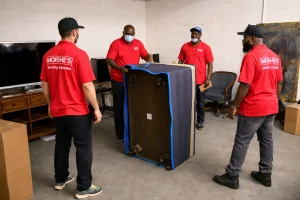
- Professional movers use these blankets for large furniture, appliances, mirrors, or fragile items.
- Properly wrapping items with moving blankets stabilizes them inside the truck and reduces damage during transport.
- The same blankets are also commonly used in self storage units to protect furniture stored for long periods.
What Is a Moving Blanket?
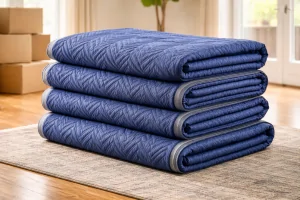
A moving blanket is a thick, quilted blanket used to protect furniture and bulky items during a move. Movers use it to cover sensitive surfaces before items are carried through hallways, stairs, or loaded into a moving truck.
What Are Moving Blankets Made Of?
Most moving blankets are made from multiple layers of quilted material designed to absorb impact and protect furniture surfaces. Their structure usually includes:
- polyester or cotton fibers for strength and flexibility
- quilted filling (interior padding) that cushions impacts
- a durable outer material resistant to friction
This construction makes them much thicker than a regular household blanket. During a move, the interior padding acts as a protective layer that reduces pressure when furniture is leaned, placed down, or transported alongside other items.
Why Do Professional Movers Always Use Moving Blankets?
These furniture pads create a protective layer between items and the surfaces they come into contact with. Instead of wood, metal, or glass hitting walls or other objects directly, the padding absorbs the impact.
Movers use moving blankets for several types of protection:
- Furniture protection: Prevents scratches, dents, and pressure on sensitive surfaces.
- Home protection: Reduces the risk of hitting walls, door frames, or floors during the move.
- Stabilizing items in the truck: Wrapped furniture does not slide easily and can be placed more securely next to other items.
- Protection against dust and dirt: The blanket covers surfaces during transport.
Items for which movers almost always use moving blankets include:
- couches and armchairs
- wardrobes and dressers
- wood or glass tables
- appliances
- televisions and mirrors
- decorative items or artwork
A professional moving company manages the entire process (packing, transportation, and unpacking), eliminating risks and giving you the assurance that your items will arrive intact.

Where to Buy Moving Blankets?
There are two options:
- Buying Moving Blankets
Moving blankets can be purchased relatively easily in stores or online. The most common places are:
- Amazon
- Walmart
- Home Depot
- stores specialized in moving supplies
The price depends on the thickness and quality of the padding. Thicker options are preferred for heavy furniture or appliances because they provide better cushioning during transport.
If you do not want to buy these materials, you can opt for professional moving boxes and packing materials.
2. Renting Moving Blankets
Many people choose to rent them, especially if the move happens only once. Truck rental companies or moving companies often offer these blankets together with other equipment needed for transport.
This is also the option frequently used by professional teams of movers. The blankets are part of the standard equipment and are prepared before the furniture is taken out of the home.
Can You Wash Moving Blankets?
Yes, these blankets can be washed, but the cleaning method depends on the material and their thickness. Most are made from quilted textile fibers, and the interior padding can retain moisture if they are washed or dried incorrectly.
For blankets used occasionally during a personal move, cleaning is fairly simple. In many cases, a low-temperature wash and complete drying before reuse are sufficient.
A few useful rules:
- use cold or lukewarm water, not high temperatures
- avoid aggressive spin cycles
- allow the blankets to dry completely before storage
- if they are very thick, air drying is the safest option
Some very thick blankets, frequently used by moving companies, are cleaned in industrial laundries because their size and weight can be difficult to handle in a regular washing machine.
If properly maintained, these blankets can be reused many times. That is why they are used both for moving and for protecting furniture during storage periods.
How to Use Moving Blankets?
Protective blankets are effective only if they are used correctly. The item must be fully covered, and the material must be secured so it does not shift during handling or transport.
It is recommended to wrap furniture before it is taken out of the home. This way, surfaces remain protected when items pass through hallways, stairs, or elevators.

How to Use Furniture Pads for Different Items?
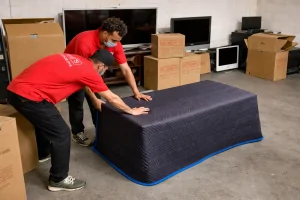
Not all items are protected in the same way. The wrapping method depends on shape, size, and material. For example:
- Couches and armchairs: They are covered completely, and the material is secured on the back and sides.
- Wood tables: The surface is protected, and the corners are covered separately to avoid impacts.
- Wardrobes or dressers: They are wrapped completely, including edges and corners.
- Appliances: Two blankets are usually used to create a thicker layer of protection.
How to Wrap Furniture With Moving Blankets
The process of wrapping and packing furniture follows a few simple steps:
- Cover the item completely
The blanket must cover all exposed surfaces. - Protect the corners
Furniture corners are the areas most likely to get hit. - Secure the material
The padding must be fastened so it does not slip. - Check stability
Before transport, check that the blanket remains secure when the item is lifted.
How Movers Use Blankets Inside the Truck?
After the furniture is wrapped, the blanket also plays a very important role inside the truck. Movers use these blankets to:
-
- separate items from each other
- fill empty spaces between pieces of furniture
- prevent friction between surfaces
The padding layer reduces the movement of items when the truck accelerates, brakes, or goes over bumps.
Common Mistakes When Using Moving Blankets
One of the most common mistakes is incomplete coverage of the item. If the blanket protects only the central part of the furniture, the corners remain exposed, and those are exactly the areas that get hit most often.
Another common situation is the blanket slipping during transport. If the material is not properly secured, it shifts when the item is lifted or placed down. At that moment, the furniture surface remains unprotected.
A protection layer that is too thin is also a frequent issue. For large or heavy items, a single blanket does not provide enough cushioning. Movers usually use two layers for wardrobes, appliances, or heavy tables.
There are also cases where the furniture is protected correctly but not stabilized inside the truck. Even if the item is wrapped, friction between pieces or movement during transport can cause scratches.
For this reason, it is recommended to rely on a team of movers. Protecting furniture and preparing items for transport is not easy to manage on your own, and the entire process can take much longer than you expect.
Moving Blankets vs Bubble Wrap
When preparing furniture for a move, a common question appears: is protective wrap enough, or are the blankets used by movers necessary? The two materials serve different purposes, and the choice depends on the type of items you are transporting.
Thick blankets are used mainly for bulky furniture. The quilted layer cushions impacts and protects surfaces when items are handled or placed next to other pieces inside the truck.
Bubble wrap is more suitable for fragile or small items. It protects against pressure and vibrations, but it does not provide the same level of protection for large surfaces.
In most cases, the two materials are used together in a complete professional packing process for moving. Fragile items are wrapped in protective film, and furniture is covered with thick blankets before being loaded into the truck.
How Many Moving Blankets Do You Need?
The amount of furniture pads is usually estimated based on the number of large furniture pieces in the home. Couches, wardrobes, or appliances take up more space and require more padding to prevent friction or impacts during transport.
As a general guideline:
- large couch or sofa – 2 to 3 blankets
- dining table – 1 to 2 blankets
- wardrobe or dresser – about 2 blankets
- large appliances – 2 to 3 blankets
- chairs or smaller items – usually 1 blanket
In the case of a full apartment or house move, teams of movers usually prepare about 20–40 blankets so that each important piece is properly protected.
The exact amount always depends on the number of items and how they are loaded into the truck. If furniture is placed close to each other, additional padding helps prevent friction between surfaces during transport.
FAQ about moving blankets
How to secure moving blankets?
After the item is fully covered, the blankets must be secured so they do not slip during handling or transport. Stretch wrap, elastic bands, or straps are usually used to keep the padding in place. The goal is for the material to remain tight around the furniture, without loose areas that could come undone when the item is lifted.
Are moving blankets waterproof?
Most blankets are not completely waterproof. They provide good protection against dust or light contact with moisture, but they are not designed for heavy rain. If there is a risk of water exposure, items are additionally covered with plastic wrap or protective film.
Can moving blankets protect floors?
Yes. In addition to protecting furniture, these blankets are often used to protect floors or walls during a move. When heavy items are temporarily placed on the floor or leaned against a wall, the padding reduces pressure and prevents scratches.
Are furniture pads the same as moving blankets?
Yes, the terms are used almost interchangeably in the moving industry. Furniture pads is the technical term used by movers, while moving blankets is the more common term used by most people.
Do professional movers bring moving blankets?
Yes. For professional moving companies, these blankets are part of the standard equipment. They are prepared before furniture is taken out of the home to protect items throughout the entire transport process.
Get a Free Moving Quote Today